Bad Smell Coming From Drains: Causes and Solutions
A bad smell coming from your drains is more than just unpleasant—it can be a warning sign of a developing drainage problem. Whether you’re dealing with foul odours in your kitchen, bathroom, shower, or outdoor drains, identifying the source early can help you avoid costly repairs, health risks, and potential property damage.
In this guide, we’ll explain the most common causes of smelly drains, practical solutions you can try, and when it’s time to call a professional drain cleaning company.
Why Do Drains Smell Bad?
Drain odours are typically caused by trapped organic matter, sewer gases, stagnant water, or blockages within the drainage system. These smells often start subtly but can become stronger over time if the underlying issue is not addressed.
Some common drain smells include:
- Rotten egg or sulphur odours
- Sewage-like smells
- Musty or mouldy odours
- Stagnant water smells
- Grease and food waste odours
Understanding the cause is the first step toward solving the problem.
Common Causes of Bad Smells Coming From Drains
1. Dry or Empty P-Traps
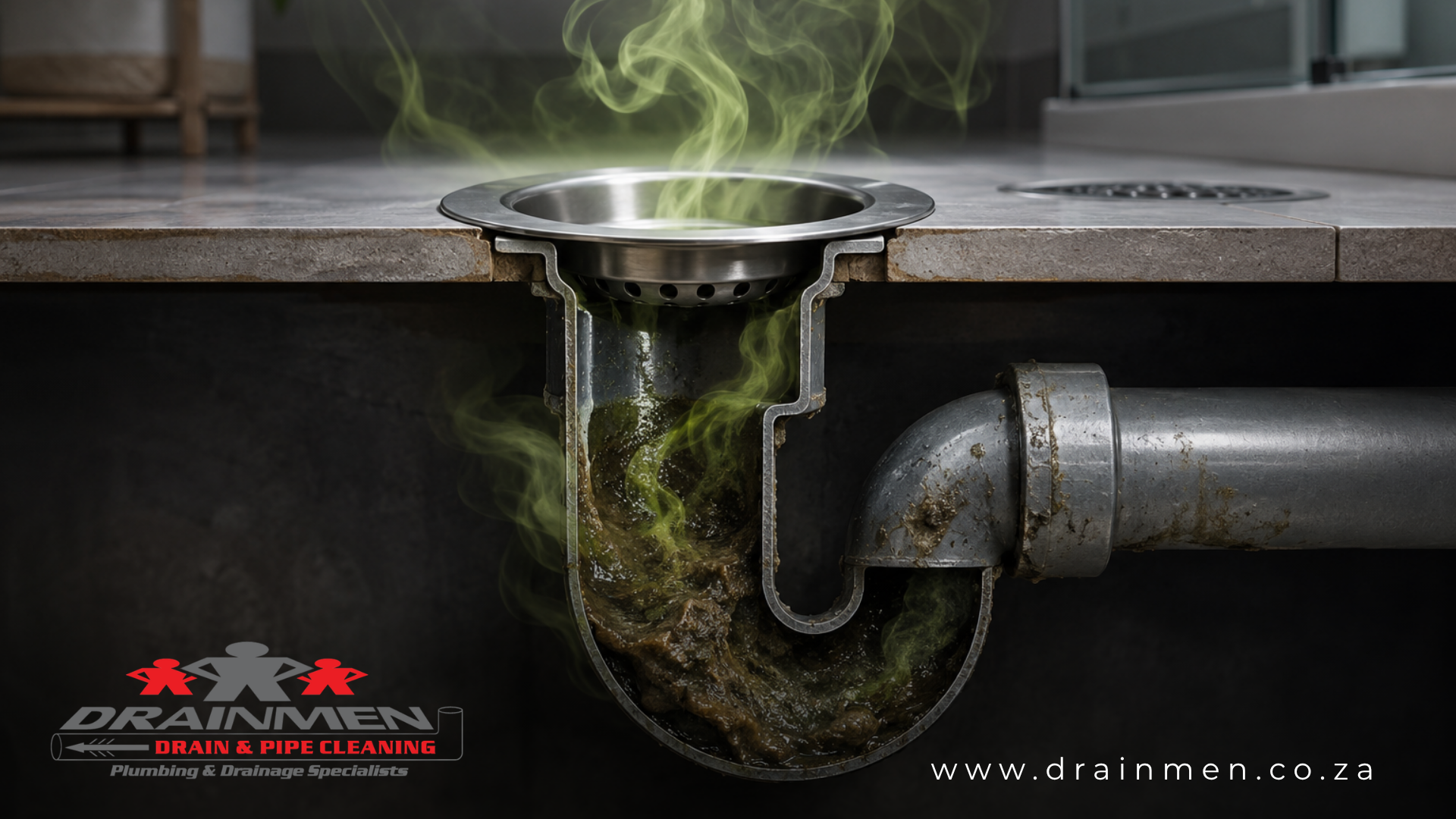
A P-trap is the curved section of pipe beneath sinks, showers, and floor drains. It holds water that creates a barrier between your home and sewer gases.
If a drain hasn’t been used for an extended period, the water inside the trap can evaporate, allowing unpleasant sewer gases to enter your property. Industry maintenance professionals frequently identify dry traps as one of the most common causes of drain odours.
Solution
Run water down the affected drain for a few minutes. For seldom-used drains, regularly adding water can help maintain the protective seal.
2. Food and Grease Build-Up
Kitchen drains often develop odours due to accumulated food particles, grease, fats, and oils. Over time, this organic matter decomposes and creates unpleasant smells.
Solution
Avoid pouring cooking oil or grease down the sink. Periodic professional drain cleaning can remove stubborn build-up and restore proper flow.
3. Hair and Soap Scum Accumulation
Bathroom drains frequently collect hair, soap residue, toothpaste, and personal care products. These materials can trap bacteria and create foul odours.
Solution
Remove visible debris where possible and use drain guards to prevent future build-up.
4. Blocked Sewer Lines
A partially blocked or fully blocked sewer line can cause sewage gases and wastewater to back up through drains. Warning signs often include:
- Multiple drains smelling bad simultaneously
- Slow-draining fixtures
- Gurgling sounds from pipes
- Recurring blockages
Solution
Professional drain jetting and CCTV drain inspections can identify and remove obstructions before they escalate into major plumbing emergencies.
5. Damaged or Cracked Drain Pipes
Underground drainage pipes can crack due to ground movement, tree root intrusion, corrosion, or age. These defects may allow wastewater and sewer gases to escape.
Solution
A CCTV drain inspection can accurately locate damaged sections without unnecessary excavation.
6. Ventilation Problems
Drainage systems rely on vent pipes to safely release sewer gases above the roofline. If vents become blocked by debris, nests, or damage, odours may be forced back into the building.
Solution
A professional drainage specialist can inspect and clear blocked vent systems.
7. Septic Tank Issues
Properties using septic systems may experience foul drain odours when tanks become overloaded or overdue for maintenance. Neglected septic systems can create odours, blockages, and environmental concerns. Regular maintenance is often required to prevent failures and contamination risks.
Solution
Schedule regular septic tank inspections and pump-outs according to local requirements and usage levels.
DIY Solutions for Smelly Drains
Before calling a professional, you can try:
Flush the Drain
Run hot water through the drain to remove minor residue and stagnant water.
Clean Drain Covers
Remove and clean drain grates, strainers, and sink stoppers.
Check Unused Drains
Pour water into guest bathroom drains, floor drains, and other infrequently used fixtures.
Inspect for Visible Blockages
Remove accessible debris such as hair and food waste where safe to do so.
Avoid Harsh Chemical Cleaners
Repeated use of chemical drain cleaners may damage pipework and often fails to address the underlying cause.
When Should You Call a Drain Specialist?
Professional assistance is recommended if:
- The smell keeps returning
- Multiple drains are affected
- You notice sewage backups
- Drains are slow despite cleaning
- Gurgling noises occur regularly
- You suspect a broken pipe or root intrusion
Drain specialists use high-pressure drain jetting, CCTV inspections, and specialised equipment to diagnose and resolve problems quickly.
South African Drainage Compliance and Property Owner Responsibilities
South African building and drainage regulations place responsibility on property owners to maintain drainage installations and sewer connections in proper working condition. Drainage systems must be connected, maintained, and operated in accordance with municipal requirements and national building regulations.
Regulations also prohibit sewage from entering stormwater systems, natural watercourses, streets, or public areas, helping protect public health and the environment.
Property owners should ensure:
- Drainage systems are properly maintained
- Access points remain visible and accessible
- Blockages are addressed promptly
- Sewer connections remain in good condition
- Septic systems are serviced when required
Failure to maintain drainage infrastructure can lead to environmental issues, municipal penalties, and expensive repairs.
How Drainmen Can Help?
At Drainmen, we specialise in identifying and resolving the root causes of bad-smelling drains throughout South Africa.
Our services include:
- High-pressure drain jetting
- CCTV drain inspections
- Blocked drain clearing
- Sewer line diagnostics
- Preventative drain maintenance
- Emergency drainage services
Whether you’re dealing with a simple blockage or a complex sewer issue, our experienced team can restore your drainage system safely and efficiently.
Final Thoughts
A bad smell coming from drains should never be ignored. While some odours are caused by simple issues such as dry traps or minor build-up, persistent smells often indicate more serious drainage problems that require professional attention.
Early intervention can prevent costly repairs, protect your property, and ensure your drainage system remains compliant with South African regulations.
If you’re experiencing recurring drain odours, contact Drainmen today for a professional inspection and long-term solution.